Walk into the Allianz Arena on a matchday and you'll hear it before you see the team. The Bayern Munich team song — "Stern des Südens" — isn't just pre-match background noise. It's the moment the stadium turns from a sea of red seats into a living, breathing organism. I've stood in the stands when the first chords hit, and the shift is immediate: strangers become brothers, scarves rise, and 75。000 voices lock into the same rhythm. That's not marketing. That's something older and harder to manufacture.
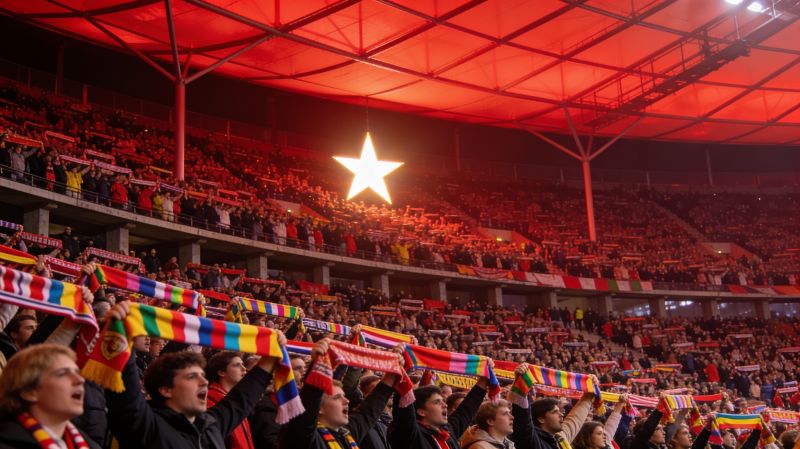
The song itself, adopted officially in the 1990s, was written by Willy Astor and originally performed by the team's own squad. Listen closely to the lyrics and you won't find the usual chest-thumping clichés about crushing opponents. Instead。it's a love letter to Bavaria — the sky, the light, the sense of home. "Stern des Südens" translates to "Star of the South," a nod to Munich's place in Germany, not just football. That regional pride is why the Bayern Munich team song resonates beyond the stadium. I've seen it sung at wedding receptions in Upper Bavaria and in cramped student flats in Berlin. It's become a cultural artifact as much as a sports anthem.What makes the Bayern Munich team song effective is its restraint. Compare it to the bombastic anthems of some European giants — all drums and demands. "Stern des Südens" builds slowly. The verses are almost conversational, then the chorus opens up like a door. When the team walks out, the timing is precise: the song peaks just as the players cross the touchline. That choreography isn't accidental. It's a psychological lever. Players have admitted in interviews that hearing the crowd hit that chorus gives them a jolt — a reminder of who they're playing for. Call it sentimental if you like. I call it a home advantage no tactical board can replicate.Of course, not every Bayern fan loves it. Some older supporters still hum the club's earlier anthems, and a few grumble that the song feels polished, almost corporate. Fair enough. But spend five minutes in the Südkurve and you'll notice something: the ultras don't just sing it — they own it. They slow it down, stretch the final lines。add their own claps between verses. The Bayern Munich team song has been rewritten by the terraces, one match at a time. That organic mutation is what keeps it alive. A song frozen in its studio version dies. This one breathes.
English clubs have "You'll Never Walk Alone." Real Madrid has its anthem. But the Bayern Munich team song sits in a different category — less hymn, more communal memory. It doesn't demand loyalty;it assumes it. Next time you watch a Bayern match, mute the commentary for the first minute and just listen. The song tells you everything about the club's self-image: proud。regional, a little sentimental, and utterly convinced of its own place in the world. You don't have to like it. You just have to admit it works.